Traditional Science Education
- Limited access to physical laboratories
- High operational cost and safety concerns
- Passive learning through 2D content
- Low engagement and limited interaction

Transforming K–12 science education through interactive 3D experimentation powered by AI Spatial Computing.
Official Launch: March 1, 2027
What it is
LangoSpace-Science removes the biggest barrier to hands-on science education: expensive laboratory infrastructure. Physical labs require specialized facilities, equipment, maintenance, and safety systems, placing quality science education beyond the reach of many schools.
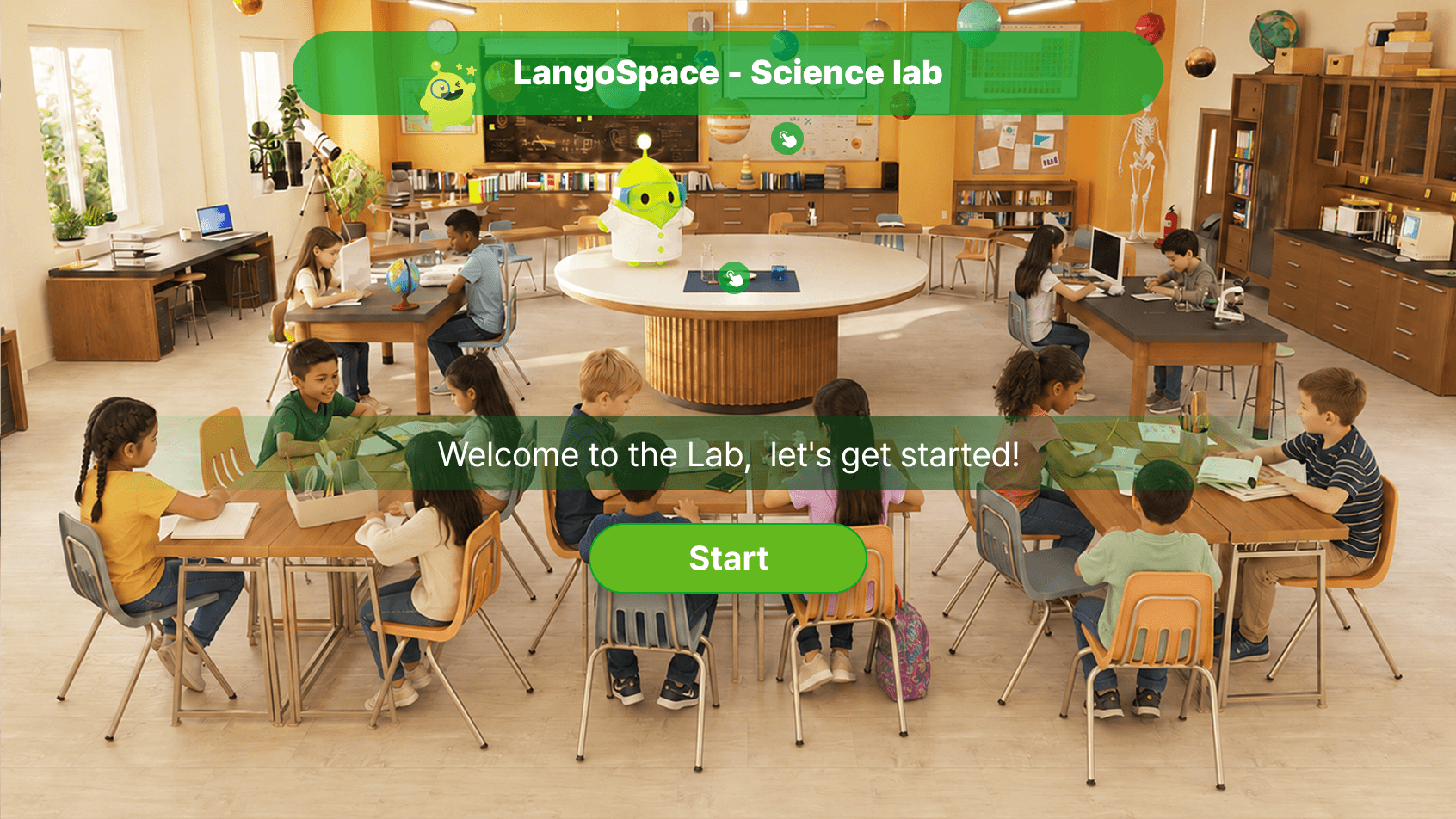
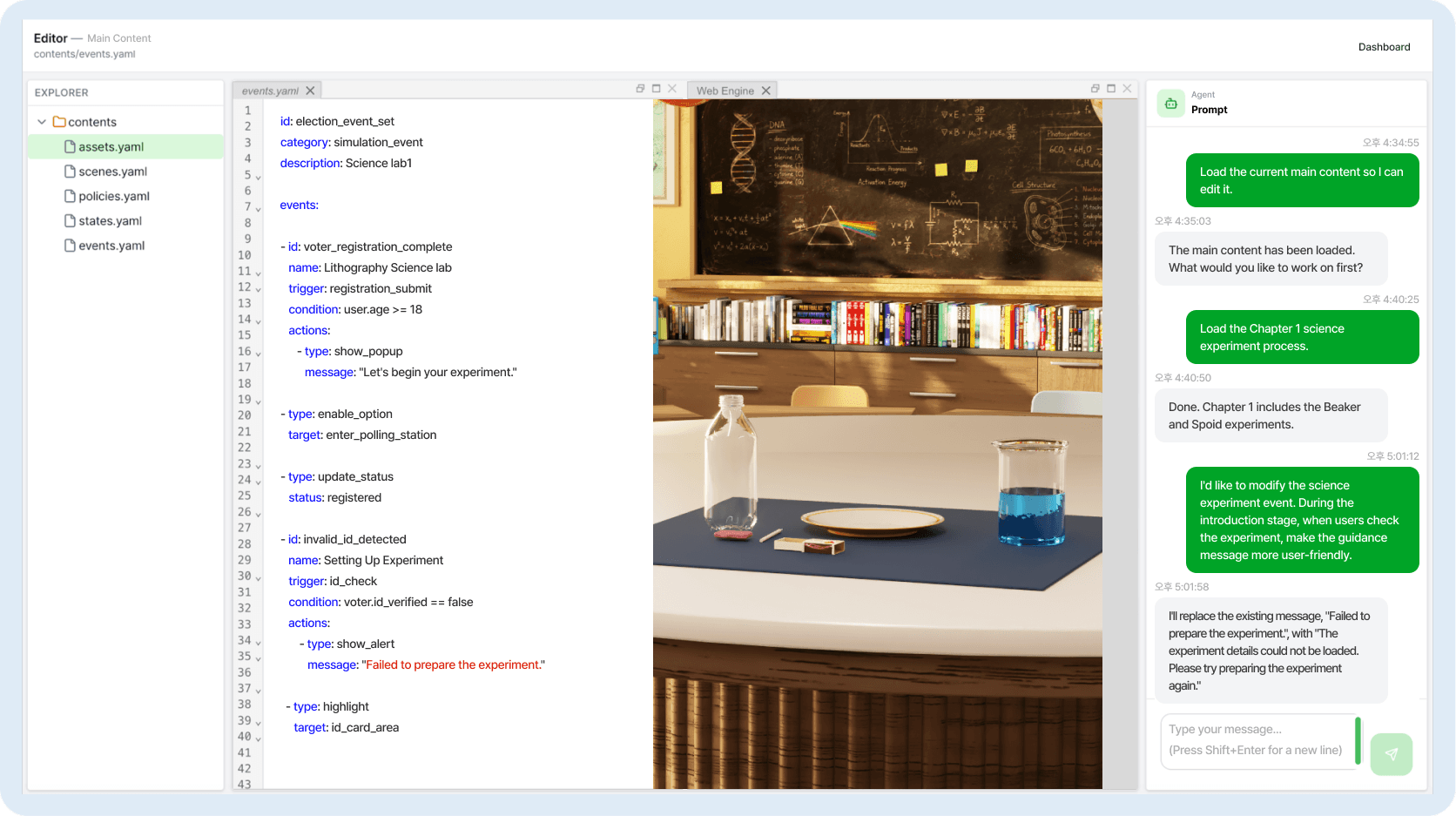
Instead of requiring new hardware, LangoSpace-Science runs directly in a web browser on devices schools already own, including Chromebooks, tablets, and laptops. Teachers simply describe an experiment using AI, and a physics-accurate interactive 3D laboratory is generated in minutes.
Every classroom can become a science lab without costly facilities, VR headsets, or specialized expertise. By making advanced science education affordable, reusable, and accessible, LangoSpace-Science helps deliver equal learning opportunities to every student.
Traditional vs LangoSpace

Features

Type “remove gravity” or “run this below freezing,” and the experiment reshapes in seconds—a fixed catalog can’t.

Upload the PDFs and worksheets you already use — lessons are built around your curriculum, not a blank prompt.
Hazardous or costly experiments repeat freely—students fail, retry and explore with no risk or material cost.
Technology
200 +30
Spatial assets & behavior-driven objects per experiment
Web·Mobile·VR·XR
One lesson file, four runtimes—no per-device build
~60 FPS
Browser-native on Chromebooks—no installs or headsets
Validation & IP
100,000+
Logged across proof-of-concept deployments in Korean K-12 classrooms.
2027
Commercial launch on March 1, 2027, following the Korean proof-of-concept.
3 patents
Filed in the U.S., EU, China, Japan, and Vietnam.